I was looking at my own work schedule the other day, mentally calculating how much a few hours of extra overtime would add to my paycheck. Then I stumbled upon the final mission debriefs of NASA astronauts Suni Williams and Butch Wilmore, and suddenly, my everyday workplace complaints felt incredibly small.
Imagine packing a small travel bag for a quick, eight-day business trip. You say goodbye to your family, promising to be back by the weekend. But once you arrive at your destination, your boss calls to say the company car broke down, and for your own safety, you won’t be coming home for another nine months. Oh, and your destination is a metal tube floating 250 miles above the Earth in a deadly vacuum.
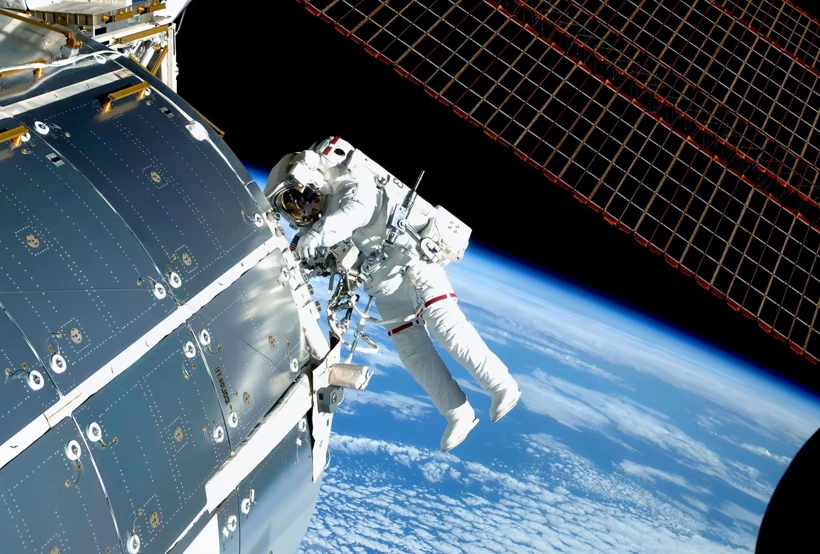
When I watched Suni and Butch finally step back onto solid ground after an agonizingly extended stay aboard the International Space Station (ISS), my mind immediately went where I think a lot of our minds went: How on earth (or off it) are they getting compensated for this massive delay? The answer absolutely shocked me, and it reveals a lot about the bizarre reality of the space exploration industry. Let’s dive into the financial and physical receipts of spending nearly 300 unplanned days among the stars.
The Starliner Saga: From a Quick Visit to a Cosmic Residency


To understand the financial implications, we first have to look at how we got here. The mission, which kicked off aboard the Boeing Starliner, was supposed to be a standard, relatively short crewed flight test. It was a milestone moment for commercial spaceflight, but the math in orbit rarely matches the math on the ground.
As I followed the mission updates week by week, the situation slowly escalated from a minor delay to a full-blown rescue scenario. NASA ultimately made the tough, “safety first” call to keep them up there due to a cascade of technical red flags:
- Persistent Helium Leaks: The spacecraft’s propulsion system was losing the vital gas needed to maintain pressure.
- Thruster Uncertainties: Several reaction control thrusters failed or underperformed during the initial docking phase.
- The Zero-Risk Policy: Following the tragic lessons of the Challenger and Columbia disasters, NASA simply refused to gamble with human lives on a faulty return vehicle.
What was supposed to be roughly a week-long checkout flight morphed into a grueling 286-day orbital marathon. They had to integrate into the existing ISS crew, taking on maintenance tasks and experiments they hadn’t originally trained for, all while managing the psychological weight of not knowing exactly when they would see their families again.
The Overtime Myth: Why Space Doesn’t Pay by the Hour

Here is where my mind was completely blown. If a factory worker or a software developer is forced to work a double shift or give up their weekends for a massive project, the bank account usually reflects that sacrifice. We expect hazard pay, overtime, and bonuses.
But NASA doesn’t operate like a Silicon Valley tech giant; it operates like the federal government.
Astronauts are classified as civil servants, tied to the federal government’s General Schedule (GS) pay scale. Here is the harsh reality of their compensation:
- A Fixed Salary: Experienced astronauts typically earn an annual salary hovering around $152,000.
- Location is Irrelevant: Whether they are sitting comfortably in a simulator in Houston, Texas, or frantically repairing a cooling loop in the vacuum of space, their base salary remains exactly the same.
- Zero Overtime: There is no “time-and-a-half” for spending an extra 278 days in microgravity. The concept of overtime literally does not exist in their contracts.
When I realized this, I had to stop and process it. These highly trained engineers and pilots, who hold multiple advanced degrees and risk their lives sitting on top of controlled explosions, make less than a mid-level manager at a mid-sized tech startup.
The $5 Daily Per Diem: A Symbolic (and Tiny) Consolation
While their base salary didn’t budge, the bureaucratic system does have a small loophole: travel expenses.
Just like any government employee sent on a work trip, astronauts are entitled to a daily “per diem” to cover incidental expenses. However, because the government already provides their “housing” (the ISS) and their “meals” (dehydrated space rations), this daily allowance is slashed to the absolute minimum.
According to NASA spokespeople, the daily incidental rate for the ISS is a mere $5 a day. (Historically, it has been as low as $1.20!).
Let’s do the math on that. For enduring the immense stress, the separation from loved ones, and the constant, low-level threat of orbital debris, Williams and Wilmore earned an extra $1,430 each for their extended 286-day stay. I honestly spend more than $5 on my morning coffee before I sit down to write these articles. The fact that this is the financial compensation for being trapped in orbit is almost comical.
The Real Bill: Paying with Physical and Mental Health


If the financial reward is basically non-existent, what is the actual cost of this mission? As I dug into the medical data surrounding long-duration spaceflight, it became clear that the real currency these astronauts are spending is their own biology.
The human body was explicitly designed by millions of years of evolution to operate under Earth’s gravity. When you remove that gravity for nine months, the biological alarms start ringing immediately. The extended stay took a severe toll that no amount of hazard pay could truly fix:
- Bone Density Loss: In microgravity, the body stops maintaining the skeleton. Even with two hours of rigorous exercise a day strapped to resistance machines, astronauts can lose up to 1% to 2% of their bone mass per month.
- Muscle Atrophy: Without gravity fighting against every movement, the muscles—especially in the legs and lower back—begin to waste away rapidly.
- Neurological Remodeling: This is the part that genuinely scares me. Recent neurological studies have shown that extended stays in space cause the fluids in the brain to shift upward, physically altering brain structure and expanding the ventricles. It can take years for the brain to completely return to its normal state.
When Williams and Wilmore finally touched down, they weren’t just tired; they were fundamentally altered by their environment. They face months of intense physical therapy just to walk normally again and readjust to the heavy pull of Earth.
Final Thoughts: Passion Over Paychecks


Researching this story completely shifted my perspective on what it means to be an astronaut today. We tend to glamorize space travel, imagining it as a glorious, highly lucrative career path. The reality is that it is grueling, underpaid, and deeply dangerous government work.
It is abundantly clear to me that no one goes into space for the money. You don’t endure a nine-month accidental confinement, drink recycled sweat, and sacrifice your bone density for a $5 daily per diem. You do it because you possess an unshakeable belief in human exploration, scientific discovery, and pushing the boundaries of what our species can achieve. Williams and Wilmore didn’t just survive an engineering failure; they gave us a masterclass in patience, professionalism, and raw human resilience.
I keep thinking about the sheer mental fortitude it takes to look out the window at your home planet, knowing you can’t go back, and still waking up to do your job every single day.
I have to ask you guys: If you were offered a guaranteed ticket to space tomorrow, but you knew you’d be locked into a standard government salary with the massive risk of being stuck up there for nearly a year, would you still take the flight? Or is the reality of space travel a little too harsh for your liking? Let me know what you think down below!
You Might Also Like;
- The Dark Side of Nanotechnology: Could Microscopic Swarms Erase Billions?
- The Illusion of Digital Immortality: Are You Really Uploading Your Mind?
- The View That Changes Everything: Artemis 2’s Deep Space Eclipse
-

-

-

-

-

-

-
-

-

-

-

-