

Formula E’s next-generation Gen4 race car is both more powerful and more efficient, featuring up to 700 kW of regenerative braking, new Bridgestone tires, and a fully recyclable construction, ushering in a new era for electric motorsport.
Formula E has officially unveiled its next-generation Gen4 electric race car. Although it may initially resemble the cars from previous seasons, the Gen4 features a much more powerful, wider, and longer design. As Formula E CEO Jeff Dodds put it, the car is “much more menacing.” Key innovations include up to 700 kW of regenerative braking, the return of Bridgestone, increased aerodynamic downforce, and a fully recyclable structure.
Formula E’s Long Journey

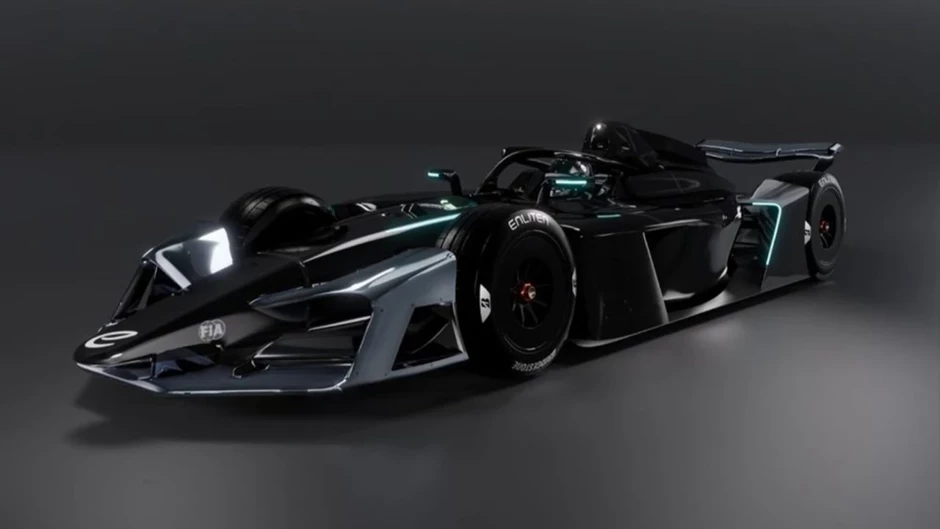
The series has come a long way since its first race in 2014. The inaugural season faced criticism for slow cars and the mandatory mid-race car swap. The Gen2 eliminated the car swap; the Gen3 provided more power and introduced temporary four-wheel drive use. The current Gen3 Evo will race in Season 12, while the Gen4 will debut in Season 13, starting in late 2026.
The new car’s power in race mode is 603 hp, which is a 50% increase over the Gen3 Evo, reaching 804 hp (600 kW) in Attack Mode and Qualifying. In comparison, while 2025 F1 cars are more powerful with a full battery, their power drops to around 536 hp (400 kW) when the battery is depleted. The Gen4’s permanent AWD system is a first in single-seater FIA series for decades. The car can reach a maximum speed of 337 km/h, nearly doubling that of the first generation.
Permanent All-Wheel Drive and Two Bodywork Options
The new generation will feature two distinct bodywork options: high and low downforce. Nevertheless, teams are not expected to heavily invest in wind tunnel research as seen in F1, as the biggest gains will come from software and power unit development. During the Gen4 era, traction control and ABS will be permitted without restriction. Formula E has fully opened up these systems to strengthen its technological connection with road cars.
Efficiency remains critical. Since the 55 kWh battery is not enough to complete the entire race at full power, cars need to recover 40% of their required energy during the race. Fortunately, the Gen4 can recuperate up to 700 kW during braking, a major advantage for drivers. The vehicle’s environmental side is also prominent. The Gen4 is constructed from 100% recyclable materials, with 20% of its components already containing recycled content.
The Gen4 has been tested for over 8,000 km so far—more than the total distance of a Formula E season. Teams have begun receiving their chassis, continuing to familiarize themselves with the car for Season 13 while preparing for Season 12. The introduction of the Gen4 may require a reassessment of tracks. Narrow circuits like the Excel Arena in London may no longer be suitable due to the larger and faster cars. However, as long as the efficiency-focused race format is maintained, Formula E’s characteristic close-quarters racing is expected to continue.
You Might Also Like;
- The Mystery of the Far Side: What Is Hiding in the Lunar Shadows? | Metaverse Planet
- The Doomsday Clock Hits 85 Seconds to Midnight: Are We Out of Time?
- Nvidia’s AI Can Now Predict the Future (Of Weather)
-

-
-
-

-
-

-

-

-

-

-

-

