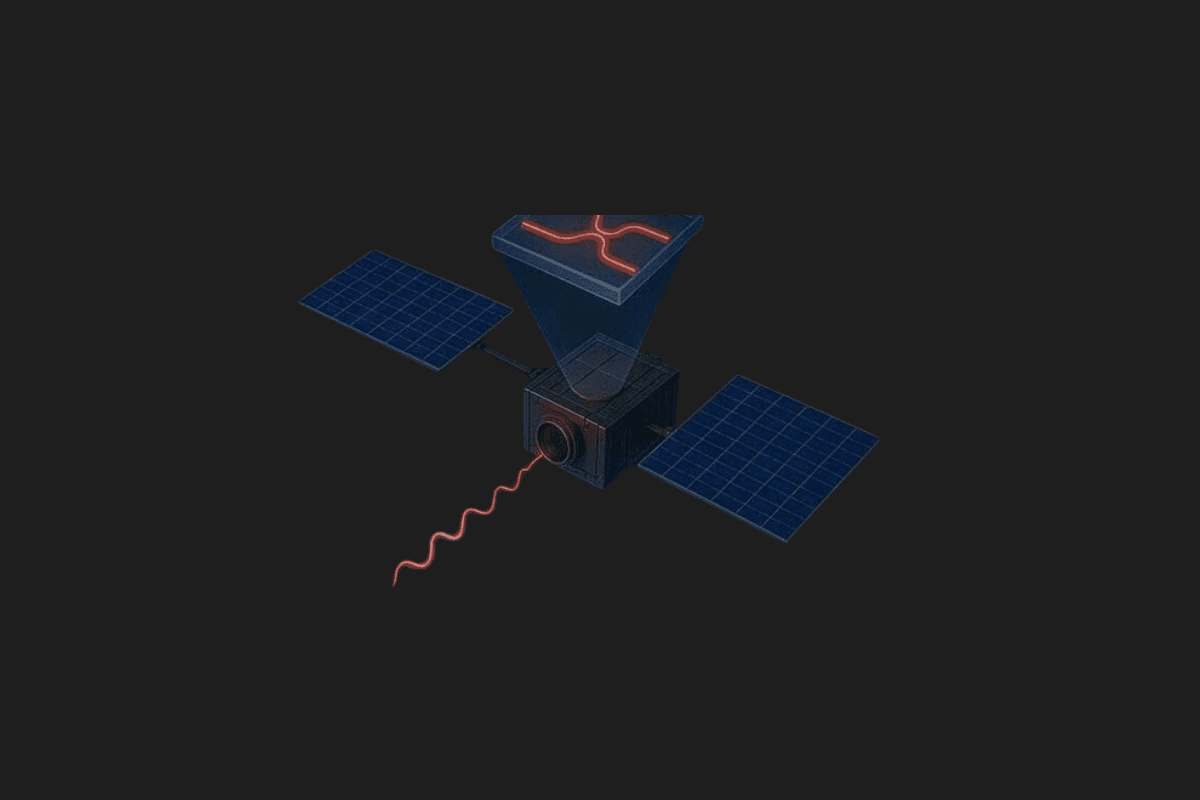
The first quantum computer launched into space can process data onboard, enabling energy savings and rapid analysis. This innovation could revolutionize various fields, from space-based observation to climate monitoring.
For the first time ever, a photonic quantum computer has been sent into space. Developed under the leadership of the University of Vienna, this compact system was launched on June 23 from Vandenberg Space Force Base in California aboard a SpaceX Falcon 9 rocket. The system, which will operate in Earth’s orbit at an altitude of approximately 550 kilometers, is seen as heralding a new era in space-based data processing and observation technologies.
Space-Hardened Quantum Technology

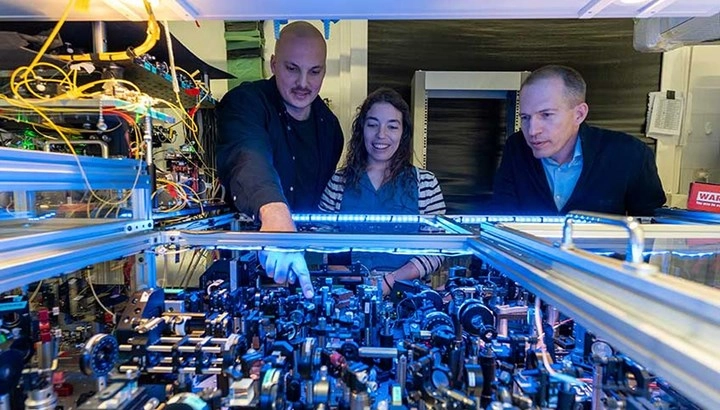
Adapting a quantum computer for space brought significant engineering challenges. The Vienna team engineered the device to withstand the extreme temperature fluctuations, radiation, and vibrations of space travel. Furthermore, the device was assembled in just 11 working days at the German Aerospace Center’s cleanroom in Germany. The device is expected to transmit its first data within a week. Professor Philip Walther, who leads the project, noted that it is now possible to conduct more space experiments in both fundamental quantum physics and applied fields.
Moreover, one of the most remarkable aspects of this satellite is its ability to process data onboard. This means, for instance, that data from sensors detecting forest fires can be analyzed directly on the satellite without being sent back to Earth. This significantly reduces energy consumption and speeds up response times.
Unlocking New Capabilities for Space Missions

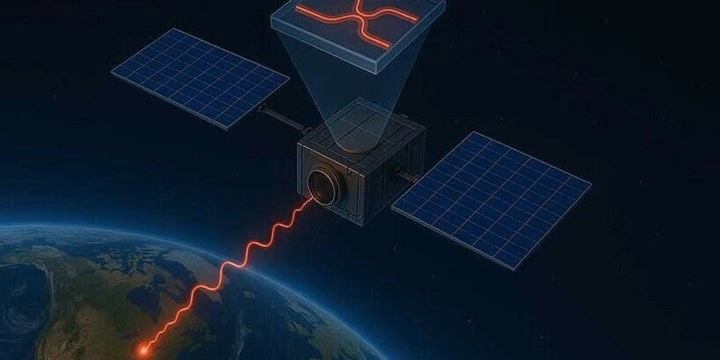
The processor, built upon optical systems, performs demanding tasks such as Fourier transforms and convolution calculations far more efficiently than classical computers, by utilizing physical principles like interference and diffraction. The system’s flexible and reconfigurable design also allows it to be adapted for future missions. According to Walther, this mission also presents a crucial opportunity to test the long-term performance of quantum hardware in space. The device has the potential for use in numerous areas, including climate monitoring, satellite communication, and fundamental quantum research.
To ensure the stability of this precise setup, the experiment was conducted under ultra-high vacuum and at a very low temperature of −265°C (8 Kelvin). These conditions eliminated vibrations and surface contaminants, allowing the device to maintain stability. The team also used a special technique called “self-homodyne detection” to filter out background light and amplify the true signal, making the collected optical data much clearer.
Despite the challenges of implementation, which currently limit ULA-SNOM to advanced research laboratories due to its requirements for cryogenic cooling, ultra-high vacuum, specialized metal tips, and highly precise laser systems, future work is expected to focus on making this method more practical, accessible, and widespread.
You Might Also Like;
-

-

-
-

-
-
-
-

-

-

-

-