I remember sitting in a tech conference a few years back where an engineer told me that copying an ASML machine was like trying to build a cathedral out of sand while wearing boxing gloves. It seemed impossible. ASML’s Extreme Ultraviolet (EUV) lithography machines are arguably the most complex pieces of equipment ever built by humans. But today, I woke up to some news that honestly made me spill my coffee.
Reports are leaking—specifically from Dutch intelligence—that China might have actually done it. They haven’t just built a replica; they’ve reportedly cloned the 3nm-capable EUV machines and have them running in a lab environment.
If this is true, the global semiconductor landscape just shifted under our feet. But as someone who has followed the “Chip Wars” closely, I know there’s a massive difference between a lab success and a global market takeover. Let’s dive into what this really means, because the devil, as always, is in the details.
The Dutch Intelligence Leak: A Reality Check


When I first read the headlines, I was skeptical. We’ve heard “breakthrough” claims before that turned out to be slightly upgraded DUV (Deep Ultraviolet) techniques rather than true EUV. However, this time the information is coming from the source: the Netherlands.
According to these leaks, Chinese engineers have managed to reverse-engineer or “clone” the core architecture of ASML’s 3nm lithography systems. I’m not entirely surprised that they reached this point. The Chinese government has been pouring billions into their “Big Fund” for years. When you have unlimited resources and a “do or die” mandate for national security, things move fast.
But here is my take: Copying the blueprint is one thing; making the machine breathe is another.
Why EUV is the “Final Boss” of Engineering

To understand why I’m both impressed and worried, you have to realize what an EUV machine actually does. It uses light with a wavelength so short that it’s absorbed by almost everything—including air. This means the entire process happens in a vacuum.
- The Mirrors: They use the world’s flattest mirrors, polished to atomic precision. If these mirrors were the size of Germany, the biggest bump would be a few millimeters high.
- The Light Source: It involves hitting a tiny drop of molten tin with a high-power laser twice—50,000 times per second—to create plasma that emits EUV light.
I’ve always thought of ASML as a “bottleneck” that protected the West’s lead. If China has truly replicated this, they haven’t just skipped a grade; they’ve jumped an entire level of human physics.
The “Yield” Trap: The Real Nightmare Begins

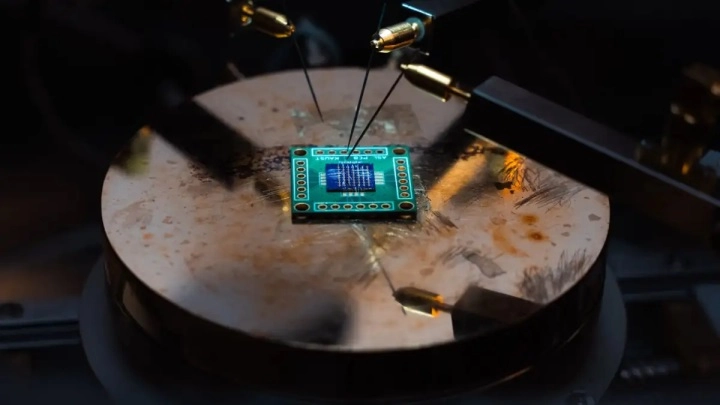
Here is where I start to see the cracks in the “China has won” narrative. Even if you have the machine sitting in your lab, you aren’t suddenly TSMC or Samsung.
In the chip world, there is a word that keeps CEOs awake at night: Yield.
Yield is the percentage of working chips you get from a single silicon wafer. When TSMC produces 3nm chips for Apple, their yield is high enough to make it profitable. From what I’m gathering, China’s current “cloned” machines are working, but their yield is likely abysmal.
Think of it like this: Imagine you managed to build a Ferrari in your garage. It looks like a Ferrari, it starts like a Ferrari, and it can reach 200 mph. But every time you drive it, three out of four times the engine explodes before you reach the end of the street.
That is China’s current problem. They can make a 3nm chip in a laboratory setting—hand-crafted, essentially—but they can’t yet manufacture millions of them where 90% actually work. Until they solve the yield issue, they aren’t a commercial threat to the giants; they are just a very expensive science project.
Why This Matters for the Rest of Us

You might be wondering, “Ugu, why should I care about some industrial printer in a cleanroom?”
I’ll tell you why: Geopolitics. The U.S. and its allies have used export controls on ASML machines as their primary weapon to slow down China’s military and AI development. If China can produce these machines domestically, that weapon is gone. We are looking at a future where:
- AI Acceleration: China could potentially train massive AI models on homegrown, cutting-edge silicon.
- Supply Chain Split: We might see two completely different tech ecosystems—one Western, one Chinese—that don’t talk to each other.
- Cost Wars: If China scales this, they might eventually flood the market with “good enough” chips, even if they aren’t the absolute best.
I’m honestly a bit worried about the pace. It feels like we are watching an arms race where the finish line keeps moving.
My Perspective: Is it a “Win” or a “Warning”?


I’ve spent a lot of time thinking about this while researching. I don’t think China “won” the tech war today. But I do think they just proved that sanctions are a double-edged sword. By cutting China off from ASML, the West forced China to build its own industry.
It reminds me of the old saying: “What doesn’t kill you makes you stronger.” By trying to starve their tech sector, we might have accidentally turned them into a self-sufficient powerhouse.
However, I’m still betting on the cumulative knowledge of the global supply chain. ASML relies on thousands of suppliers from Germany, Japan, and the US. China is trying to do all of that alone. It’s a monumental task, and while they’ve reached the 3nm milestone in a lab, the factory floor is a much harsher critic.
What’s Next?
We should expect more “leaks” and probably some very stern diplomatic meetings in the coming weeks. If these machines start producing chips for consumer devices, then we know the yield problem is being solved. Until then, it’s a massive achievement of reverse engineering, but not yet a market-shifting reality.
I’m really curious to know what you think about this. Do you believe China can actually beat the “Yield Trap” and out-produce the likes of TSMC, or is this just a display of brute-force engineering that won’t scale?
Let me know your thoughts in the comments below—I’d love to hear your take on whether this tech war is just getting started!
You Might Also Like;
- A Century-Old Aviation Dream Reborn: The Channel Wing VTOL Takes Flight
- The Dawn of the Automated Battlefield: How Ground Robots Are Redefining Warfare
- The Insatiable Hunger of AI: Why Tech Giants Are Chasing Natural Gas
-
-

-

-

-

-
-

-

-

-

-

-