

The world’s largest fusion reactor, ITER, is installing a boron gas line over a kilometer long to maintain plasma purity. By coating the surface with a thin layer of boron, radiative losses will be reduced.
ITER, the world’s largest tokamak reactor, is preparing for a plasma purification process using boron to achieve cleaner and more efficient nuclear fusion. The project involves constructing an approximately 1.5-kilometer-long boron gas line.
In a 2023 decision, the armor coatings in ITER’s plasma chamber were changed from beryllium to tungsten. This change could lead to an increase in plasma impurities, necessitating the development of a new surface treatment system. For this purpose, a 10 to 100-nanometer-thick layer of boron will be applied to the surfaces that the plasma comes into contact with. This thin boron layer will capture harmful elements like oxygen, thereby preserving plasma stability.
A Hydrogen-Boron Compound Will Be Used

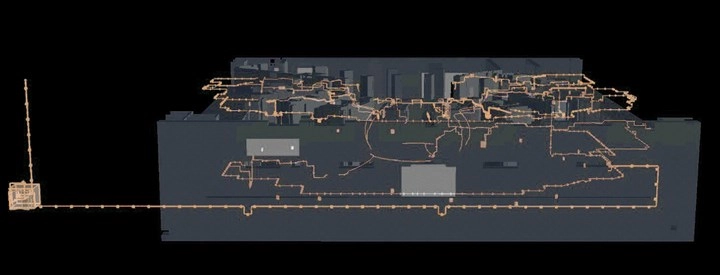
ITER engineers will use diborane, a compound of hydrogen and boron, for this process. Diborane, mixed in a 5% concentration with a helium carrier gas, will be injected into the tokamak. Once inside, the diborane will break down and accumulate on the plasma-facing walls through a glow discharge method that creates a cold plasma. This technique ensures that the boron chemically bonds to the material surface.
For this process, more than 1 kilometer of gas lines will be installed inside the reactor building, and a 400-meter-long pipe will be laid inside the vacuum vessel, with gas injected from 21 different points.
Design Issues Resolved Through International Cooperation

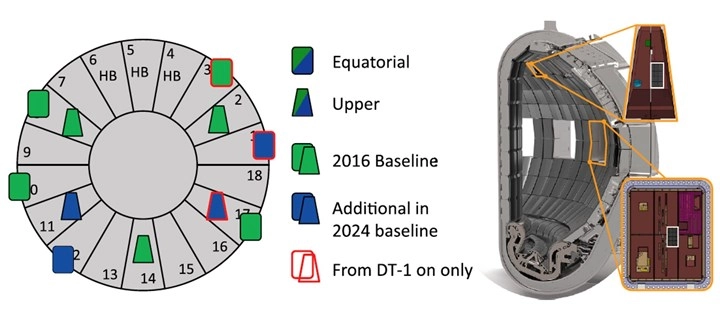
The glow discharge method was already planned for maintenance in the ITER design, but the frequent need for boron coating brought two new issues to the forefront: whether the high-energy anode design was suitable for frequent use and whether the boron coating would be evenly distributed. To answer these questions, tests were conducted at the EAST tokamak in China, ASDEX Upgrade in Germany, and WEST in France. As a result, it was decided to install four additional anodes in ITER’s vacuum vessel.
Analyses show that a single boron coating can be effective for 2.5 to 12.5 weeks. Therefore, the process is planned to be repeated as frequently as every two weeks.
Installation Begins in 2028

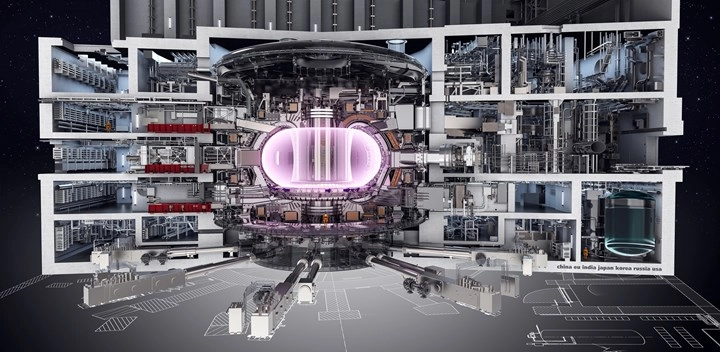
The diborane gas, which is toxic and explosive, will be stored in a special “gas cabinet” to be built outside the reactor. Two methods are being considered for neutralizing unfragmented gas discharged from the tokamak: thermal destruction by heating it to 700°C or absorption with a chemical trap. Both systems have been successfully used in different tokamaks before.
The design work for the system is nearing completion, and space is being made for it in ITER’s Tritium Building. According to the plans, the system installation will begin in 2028. This step is considered significant in ITER’s goal of producing stable and clean fusion reactions.
ITER is an international fusion facility, with its purpose being research rather than production. ITER members include China, the European Union, India, Japan, South Korea, Russia, and the United States.
You Might Also Like;
-

-
-
-

-
-

-
-

-
-

-

-

