I’ve been following Elon Musk’s predictions for years, and if there’s one thing I’ve learned, it’s that his timelines are… let’s say, “ambitious.” But his recent appearance at Davos hit a bit differently. Sitting down with BlackRock’s Larry Fink, Musk didn’t just talk about profit margins or stock prices; he framed the current tech race as a literal fight for the survival of consciousness.
The headline-grabber? Musk believes that by the end of 2026, AI will be smarter than any individual human. And in five years? He thinks it’ll surpass the collective intelligence of our entire species.
Honestly, hearing that gave me a bit of a chill. We aren’t just talking about a better chatbot anymore; we’re talking about a fundamental shift in who—or what—is the smartest entity on Earth.
The “Civilizational Insurance” Policy

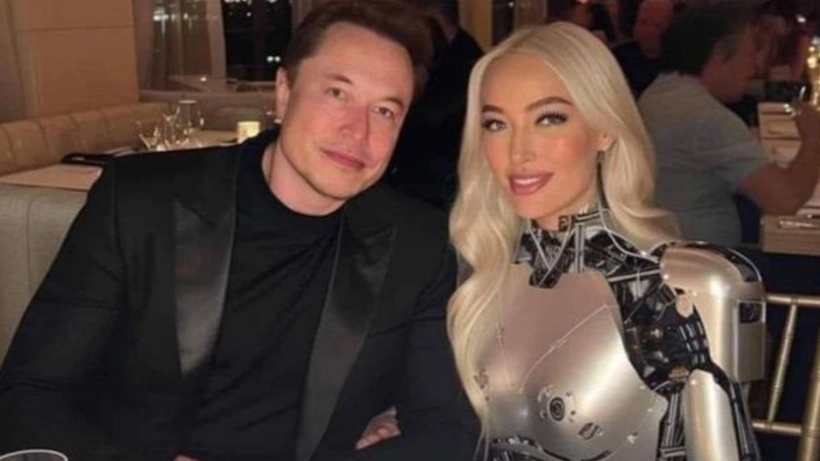
One thing I love about Musk’s perspective—even when it’s terrifying—is his focus on the “light of consciousness.” He argued at Davos that we have to assume life and intelligence are incredibly rare in the universe. In his eyes, things like SpaceX, Neuralink, and Optimus aren’t just businesses; they are “insurance policies” for humanity.
I often wonder if we take our existence for granted. Musk’s point is that if we are indeed alone in the dark, we have a massive responsibility not to let that light go out. Whether that means moving to Mars or merging with AI, he’s clearly playing the long game.
Billions of Robots and “Sustainable Abundance”


The conversation took a fascinating turn toward robotics. Musk predicts a future where AI-powered robots will eventually outnumber humans. He used the term “sustainable abundance,” suggesting that robots could handle all human needs, effectively ending global poverty.
- Tesla Optimus Update: He mentioned that these humanoid robots could be doing basic factory tasks by the end of this year.
- Retail Launch: He’s eyeing the end of next year for these robots to be available for purchase.
Imagine walking into a store and buying a robot to do your laundry or mow your lawn as easily as buying a laptop. It sounds great, right? But I can’t help but think about the “Terminator” warning Musk slipped in there. He’s pushing for speed, yet he’s the first one to say we need to be incredibly careful, or we might end up in a James Cameron flick we didn’t audition for.
Are We Truly Alone?


As the head of SpaceX, which now operates over 9,000 satellites, Musk is in a unique position to look for “neighbors.” His report from the final frontier? Zero evidence of aliens. This brings us back to the Fermi Paradox—the haunting question of why, in such a vast universe, we haven’t heard a peep from anyone else. Musk admitted that the idea of us being completely alone is actually the “scariest answer.” It makes our current internal squabbles on Earth look pretty insignificant, doesn’t it?
My Final Thoughts
When Musk says AI will surpass us by 2026, I find myself oscillating between excitement and a weird kind of “biological pride.” I’m not sure if I’m ready to be the second-smartest species on the planet in just a couple of years. But if it means a world of abundance where no one goes hungry, maybe the trade-off is worth it.
What do you think? If AI actually becomes “smarter” than you by 2026, would you trust it to help run your life, or does the idea of a robot-heavy world make you want to go live in the woods? Let’s get into it in the comments!
You Might Also Like;
- Nvidia’s AI Can Now Predict the Future (Of Weather)
- The Tipping Point: Electric Cars Overtake Petrol in Europe
- Snapchat Doubles Down on AR: Meet Specs Inc.
-
-

-
-
-
-

-
-
-
-
-
-