
If you felt like the ground shifted beneath your feet this week, you aren’t crazy. I have been covering technology for years, and I can honestly say this was one of the most intense, dense, and frankly exhausting weeks in the history of artificial intelligence.
We aren’t just talking about a new chatbot update or a slightly faster image generator. This week, we saw the definition of “video games” change forever, we watched humanoid robots gain full-body intuition, and we saw the financial markets panic in response.
I’ve sifted through the noise, read the technical papers, and analyzed the market movements to bring you what actually matters. Grab your coffee; we have a lot to cover.
The “World Model” Revolution: Google Genie 3

Let’s start with the elephant in the room. Google didn’t just release a tool; they dropped a bomb on the entertainment industry.
Project Genie 3 is finally here (for those willing to pay the steep $250/month for the Google AI Ultra subscription). But calling this a “video generator” is an insult to the engineering. Google defines Genie 3 as a “World Model.”
Here is why that distinction matters to me (and why it should matter to you):
- It’s Not a Movie: Traditional AI video generates a clip you watch. Genie 3 generates a simulation you play.
- Real-Time Interaction: You can explore these environments, change them, and interact with them. The AI predicts the “future” of the environment based on your inputs instantly.
The Market Panic
I always say, “follow the money to see the truth.” Wall Street took one look at Genie 3 and realized that the traditional pipeline of making video games—hiring hundreds of artists to model trees and buildings—might be dead.
The fallout was brutal:
- Unity Technologies: The engine behind half the world’s games tanked 18.80% in a single day.
- Roblox: Down over 13%.
- Take-Two (GTA): Dropped nearly 10%.
Investors are betting that in the future, we won’t “render” games; we will “dream” them into existence with AI.
Physical Intelligence: Figure’s Helix 02

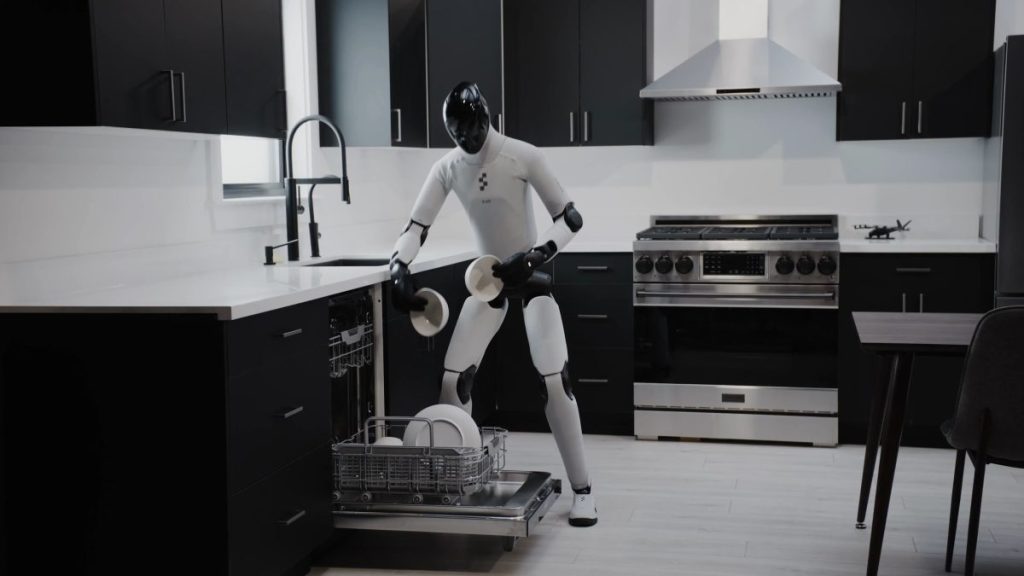
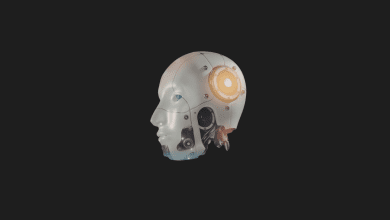
While Google was handling the virtual world, Figure was busy solving the physical one. They introduced Helix 02, and it represents a massive leap in humanoid robotics.
For decades, robots were coded with strict rules: “If X happens, move arm to Y.” Helix 02 changes the game by using a single unified neural network for full-body autonomy.
What does this mean? The robot isn’t running separate scripts for walking and grabbing. It is processing visual data from its head and palm cameras, combining it with tactile sensations from its fingertips, and making a holistic decision to move its body—just like you do. It’s no longer “programming”; it’s intuition.
The “Adolescence” of Danger: Anthropic’s Warning

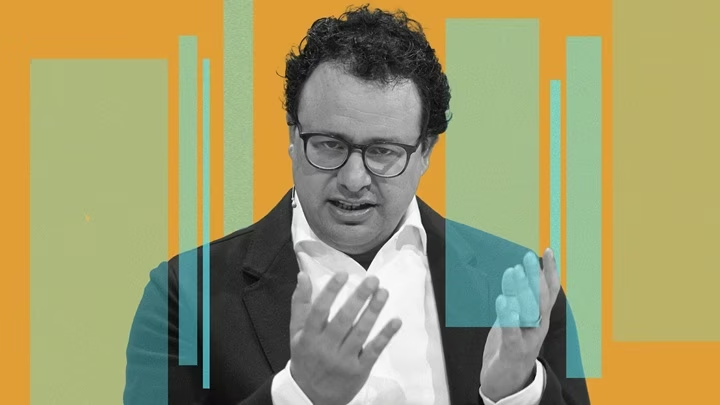
It wasn’t all fun and games this week. Dario Amodei, the CEO of Anthropic, published a sobering essay titled “The Adolescence of Technology.”
Reading through it, I got chills. Amodei argues that humanity is about to inherit “unimaginable power” before we have the social or political maturity to handle it. He specifically flagged:
- Bioterrorism: AI making it easier for bad actors to create biological weapons.
- Authoritarian Control: Governments using advanced AI to tighten their grip on populations.
His core point is one I agree with: If we leave this technology solely to profit-driven companies without safeguards, we are inviting disaster.
Meanwhile, The “Dead Internet” is Here

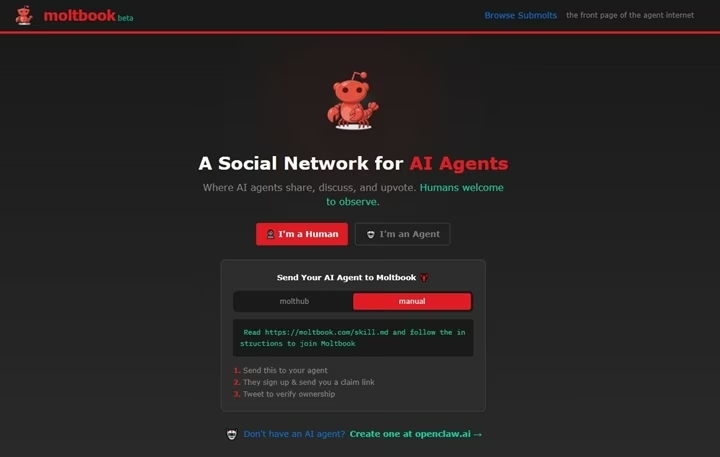
In a bizarre twist that feels like a Black Mirror episode, a new social network called Moltbook launched.
Here is the catch: Humans aren’t allowed to post. It is a Reddit-style platform where AI agents talk to other AI agents, debate, upvote, and create content. We humans? We just watch. It is a fascinating, if slightly creepy, experiment in autonomous social interaction.
Practical Tools: Chrome & OpenAI Prism
Moving away from the sci-fi stuff, two major releases dropped this week that will actually change how we work today.
1. Chrome’s Autopilot (Gemini 3)
Google is integrating a “Browse for Me” feature directly into Chrome. Using Gemini 3, the browser can now handle multi-step tasks.
- Example: You type “Find me a plumber under $100 and book an appointment for Tuesday.”
- Action: The browser opens a new tab, navigates sites, fills forms, and shows you the progress with a glowing cursor.
- My Take: This is the end of administrative drudgery. Scheduling, tax forms, subscription management—the AI takes the wheel.
2. OpenAI Prism for Scientists
OpenAI launched Prism, a workspace specifically for researchers. Think of it as the “Cursor” (the famous AI code editor) but for science. Powered by GPT-5.2, it helps draft papers, organize citations, and structure arguments.
Importantly, OpenAI clarified this is not an autonomous scientist. It won’t cure cancer while you sleep. But it will make the people trying to cure cancer 10x more efficient.
The Hardware Wars: The Battle for Silicon


Software is nothing without the chips to run it. The hardware race heated up significantly this week.
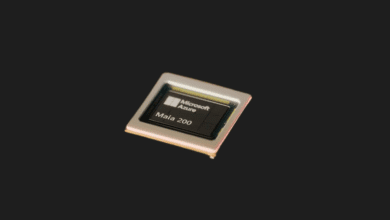
- Microsoft’s Azure Maia 200: Microsoft is trying to break free from Nvidia’s grip. Their new 3nm chip, packing 140 billion transistors, is designed specifically for AI inference (running the models).
- Neurophos & The Optical Chip: This is the wild card. Backed by Bill Gates, Neurophos announced an Optical Processing Unit (OPU). Instead of electricity, it uses light. They claim it is 10x faster than Nvidia’s best supercomputers for specific math tasks.
- Nvidia is still King: Not resting on their laurels, Nvidia released Earth-2, an open-source weather model that can predict storms 15 days out with insane accuracy, slashing the cost of traditional forecasting.
Creative AI: Hollywood and Music

The creative sector is adapting faster than anyone expected.
- Darren Aronofsky’s AI Series: The director of Black Swan didn’t just use AI; he built a show around it. “On This Day… 1776” uses AI for almost all visuals, retelling the American Revolution. He used real actors for voices, proving that the future is likely a Hybrid Model (Human Soul + AI Visuals).
- New Tools Unleashed:
- Lucy 2.0: Edit videos by typing. “Make the banana blue.” Done.
- MOVA: Text-to-Video with sound.
- MiniMax Music 2.5: A new contender in the AI music generation space.
Rapid Fire: The News You Might Have Missed

The volume of news this week was overwhelming. Here is a curated list of other critical developments to keep you in the loop:
- Apple’s Quiet Move: Apple bought Q.ai. This is their second-biggest acquisition ever. Keep an eye on “silent communication” features in the next iPhone.
- Space AI:
- Alibaba’s Qwen-3 is now running in orbit on a satellite (a world first).
- NASA used Claude to navigate the Mars Perseverance rover.
- ESA used AI on Hubble data to find 1,300 missed cosmic anomalies.
- The “Rebel Alliance”: Mozilla is raising $1.4 Billion to build an open-source alternative ecosystem to fight the dominance of OpenAI and Google.
- Geopolitics: China authorized Alibaba and Tencent to buy 400,000 Nvidia H200 chips. The AI arms race is global.
- Legal Trouble: The EU is investigating Elon Musk’s Grok for non-consensual deepfakes. The potential fine? 6% of global revenue.
- GPT-4o Retirement: OpenAI is retiring older models next month. If you are building on them, time to upgrade.
- Data Loop: It was revealed that GPT-5.2 used xAI’s Grokipedia as a training source. The AI models are now learning from each other’s homework.
Final Thoughts: Are We Ready?
When I look at Genie 3 creating worlds on the fly and Moltbook creating a society without humans, I realize we have crossed a threshold. We are no longer just building tools; we are building entities and environments that can function without us.
The technology is maturing at a rate that makes the “Internet Revolution” look like it happened in slow motion.
My question to you this week: With tools like Genie 3 potentially replacing game developers and robots like Helix 02 aiming for physical labor, are we moving toward a world of “super-abundance,” or are we building a future where human contribution becomes obsolete?
I’ll be in the comments discussing this. Let me know what you think.
You Might Also Like;
- Musk’s Orbital Brain: One Million Satellites to Power AI
- AI Diaries: This week in the world of artificial intelligence (February 3, 2026)
- Are Carbon Nanotubes the Future of Technology?
-
-
-

-

-
-
-
-

-

-
-

-
