

I have been analyzing artificial intelligence trends for a long time, and I can confidently say that this week felt like a massive tectonic shift rather than just another incremental update. We are no longer just talking about chatbots getting slightly better at writing emails. We are witnessing software algorithms directly crashing hardware stock markets, humanoid robots crossing the uncanny valley, and tech giants making aggressive moves to secure nuclear energy.
Let’s dive into the most critical developments in the AI space this week and unpack why they actually matter to you and the broader tech ecosystem.
The TurboQuant Ripple Effect: Google Shakes the Memory Market


The absolute standout news this week came from Google with the announcement of TurboQuant, a brand-new compression algorithm. On paper, a compression algorithm might not sound thrilling, but the market’s reaction tells a different story.
TurboQuant is designed to completely overhaul the memory consumption and processing costs of massive AI systems like GPT and Gemini. How does it do this? It comes down to a fundamental shift in how the AI maps data.
- The Old Way (Cartesian): Traditionally, AI vectors use XYZ coordinates.
- The New Way (PolarQuant): The first stage of TurboQuant converts these into polar coordinates. Instead of relying on multiple data points, every vector is represented by just two pieces of information: radius (the strength of the data) and angle (the semantic direction).
To put it simply, instead of telling the system to “go 3 blocks east and 4 blocks north,” TurboQuant tells it to “go 5 blocks at a 37-degree angle.” It is a much shorter, highly efficient command.
Why does this matter? Because it drastically reduces the physical hardware footprint required to run these models. The moment Google announced this, I watched the stock prices of major memory manufacturers like Micron, SK Hynix, and Samsung take a hit. The industry realizes that if AI companies need significantly less memory to run smarter models, the demand for high-end RAM could stabilize or even drop.
The Hardware Crisis is Expanding to CPUs


Ironically, while TurboQuant promises future relief, the present reality is a severe, escalating hardware bottleneck. I’ve been tracking the GPU shortages for months, but the crisis has officially mutated.
According to supply chain sources, Intel and AMD are now struggling to meet CPU demand. The massive price spikes we saw in DRAM and NAND storage are now bleeding into the processor market. System builders are already warning about a 10% to 15% increase in overall costs.
The memory sector is in even deeper trouble. DDR4 prices have surged 8.8 times over the past year. This isn’t just an “AI problem” anymore. If you are a company manufacturing everyday electronics—mobile phones, digital cameras, or smart TVs—that rely on standard DDR4 RAM, you are currently backed into a corner. I noticed some manufacturers are even trying to revert to ancient DDR3 memory, but production bandwidth for that old tech is virtually nonexistent.
Origin F1: The Robot That Actually Smiles Back

If you spent any time on social media this week, you likely saw the prototype footage of the Origin F1 humanoid robot, introduced by Shouxing Technology’s founder, Yuhang Hu.
We have seen plenty of robots that can do backflips or lift boxes, but Origin F1 focuses on something much harder: empathy and expression. The robot’s face uses a highly advanced synthetic skin layered over a complex micro-actuator system.
Here is what makes it fundamentally different:
- Anatomical Mimicry: The actuators don’t just pull the face into a preset mask. They work together with high degrees of freedom to create millimeter-level tension and relaxation, exactly like human facial muscles.
- Omni AI Integration: The hardware is driven by a multimodal AI backbone. It processes visual data (through cameras), audio (through microphones), and semantic meaning simultaneously.
When Origin F1 smiles or raises an eyebrow, it isn’t playing a canned animation. The AI is deciding what to say, analyzing the emotional context of the conversation, and calculating the exact muscle movements required to deliver that specific emotion. It is a fascinating, slightly eerie, but brilliant leap forward.
OpenAI Retires Sora: The Path to a Super-App?

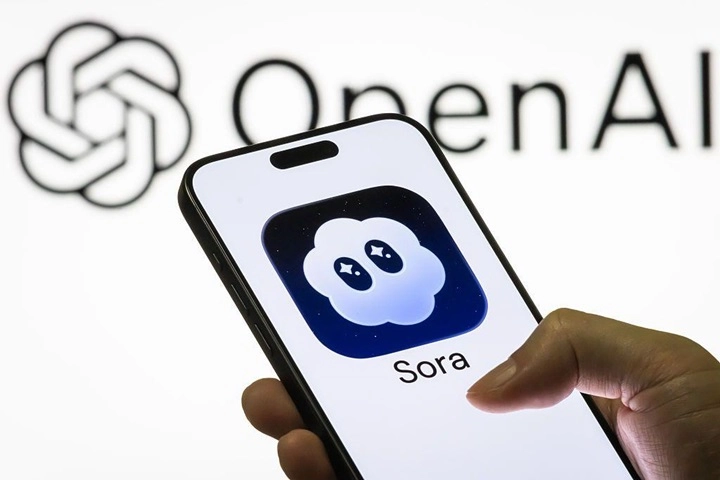
One of the most surprising moves this week was OpenAI stepping back from Sora, their highly publicized video generation tool. The standalone Sora app is officially being shut down.
When I first read the announcement, I was confused. Why kill a product that generated so much hype? But looking at the broader strategy, it makes total sense. Industry whispers strongly suggest that OpenAI is building a unified “Super App.” Instead of making users jump between ChatGPT for text, Codex for programming, and Sora for video, everything will likely be integrated into one massive ecosystem. I believe this is the right move; fragmented AI tools are becoming exhausting to manage.
Grok Gets Smarter and Alibaba Pushes RISC-V


Over at xAI, code references have revealed that the Grok chatbot is getting a new “Grok Skills” feature. This moves Grok from being just a conversational bot to an automation agent. You will soon be able to build custom command sets for repetitive workflows like data analysis, content creation, and deep web research.
Meanwhile, Alibaba’s Damo Academy introduced the XuanTie C950, a new CPU explicitly optimized for cloud computing and AI inference. What caught my attention here is the architecture. It is built on RISC-V, an open-source processor architecture. Because it avoids heavy licensing fees and allows massive customization, RISC-V is rapidly becoming the foundation for China’s independent AI hardware strategy.
New Tools and the Generative Boom

The sheer volume of new generative models dropping right now is hard to keep up with, but a few caught my eye this week:
- daVinci-MagiHuman: An impressive open-source model generating highly realistic audio-synced videos in six different languages.
- Lyria 3 Pro by Google: This is a major update to their text-to-music model. While I know the underlying Lyria 3 engine restricts outputs to 30-second tracks with embedded SynthID watermarking for safety, the granular control over tempo, mood, and genre in this “Pro” tier is a game-changer for digital creators.
- Claude Code & Cowork: Claude is breaking out of the browser. These agents can now interact directly with your local machine—opening files, navigating developer tools, and executing complex tasks natively.
- PrismAudio & RealRestorer: PrismAudio is doing incredible work analyzing video frames to auto-generate perfectly synced foley and sound effects, while RealRestorer is pushing the boundaries of AI-driven image salvage for heavily damaged photos.
Rapid-Fire Industry Shifts
To wrap things up, here are the crucial strategic moves happening behind the scenes:
- Data Portability: Google is finally letting you import your chat history and personal data from rival AI apps directly into Gemini.
- Automated Leadership: Meta’s Mark Zuckerberg is reportedly developing a personal “AI CEO” to automate his own decision-making processes and speed up company management.
- The Apple Contradiction: Apple is making two massive, opposing moves. With iOS 27, they are finally opening Siri to third-party AI models, admitting they need help in the AI race. However, they are simultaneously purging AI coding environments from the App Store, likely to maintain tight control over their developer ecosystem.
- The Power Grab: AI needs electricity, and lots of it. OpenAI (via Helion) is aggressively pushing to buy fusion energy, aiming for 50 gigawatts by 2035. Concurrently, Microsoft and Nvidia have launched a joint initiative to accelerate the deployment of nuclear power plants specifically for AI data centers.
- AI on a Budget: xAI announced a $10/month “SuperGrok Lite” tier for users who want to bypass quotas without paying the premium subscription fee.
- Mobile Agents: TECNO announced “EllaClaw,” the industry’s first official smartphone AI agent optimized specifically for emerging markets.
- AI in Advertising: Google has fully integrated its Veo video generation model into Google Ads. Advertisers can now generate high-fidelity, natively audio-synced commercial videos using nothing but static reference images and text prompts.
When I look at the big picture this week—from Google compressing the digital space with TurboQuant to Microsoft and Nvidia literally building nuclear reactors to power the physical space—it is clear we are entering a heavy industrial phase of artificial intelligence.
I’m curious to hear your take on all this. With tech giants now investing in nuclear energy just to keep these AI models running, do you think the environmental cost of this technology is justified by the advancements we are seeing? Drop your thoughts below!
You Might Also Like;
- A Century-Old Aviation Dream Reborn: The Channel Wing VTOL Takes Flight
- The Dawn of the Automated Battlefield: How Ground Robots Are Redefining Warfare
- The Insatiable Hunger of AI: Why Tech Giants Are Chasing Natural Gas
-

-

-

-
-

-

-
-

-

-

-
-

