
I’ve been glued to my screen all week, sifting through the absolute avalanche of AI news, and honestly, my head is still spinning. We aren’t just seeing incremental updates anymore; we are watching the foundational rules of hardware, privacy, and global politics get rewritten in real-time.
Instead of just feeding you a dry list of press releases, I want to break down what actually happened this week, why it matters, and what it means for us sitting on the other side of the screen. Grab a coffee, because from pocket-sized AI models to the Pentagon’s controversial contracts, we have a lot to talk about.
The Power Shift: AI Leaves the Cloud and Enters Your Pocket


For the last couple of years, we’ve been chained to the cloud. You want good AI? You pay for an API key, you connect to the internet, and you hope the server doesn’t crash. Alibaba just flipped that script.
They introduced the Qwen3.5 Small series, and it’s a massive deal. These are large language models designed to run locally on your smartphone.
- If you have a powerhouse like the iPhone 17 Pro Max, you can run the 2B parameter version smoothly.
- But even more impressively, they’ve optimized the smaller models to run on mid-range devices like the Poco F5.
Why I care: This is true decentralization. An AI that works in airplane mode, doesn’t charge you per prompt, and keeps your data entirely on your device is the holy grail for developers.
However, there’s a massive elephant in the room. Just hours after this triumphant announcement, Junyang Lin, the technical lead of the Qwen project, abruptly resigned. No detailed explanation, just walked away. When the lead architect of a project bails right after a major launch, my alarm bells start ringing. Is there a fundamental flaw they aren’t telling us about, or did corporate politics push him out? We need to keep an eye on this.
ChatGPT-5.4: The AI That “Shows Its Work”

OpenAI dropped GPT-5.4 for premium subscribers this week, and it comes in two distinct flavors: Thinking and Pro.
I’ve been playing around with the Thinking model, and it is fundamentally different from how we usually interact with chatbots. Instead of just spitting out an answer and hoping it’s right, GPT-5.4 actually outlines its thought process. It creates an action plan, evaluates it, and then executes it—and you can watch the whole thing happen.
My take: If you use AI for coding, deep data analysis, or academic research, this is exactly what we’ve been waiting for. When an AI hallucinates, it’s usually because it skipped a logical step. By exposing the “thinking” phase, we can course-correct the model before it goes off the rails.
(Bonus note: If you aren’t a paying subscriber, OpenAI finally opened up GPT-5.3 Instant to all free users this week. Enjoy the upgrade!)
The Military-AI Complex Gets Messy


The fallout from OpenAI’s contract with the Pentagon is getting incredibly loud. After facing massive public backlash and a wave of users deleting their accounts, OpenAI tried to do damage control. They updated their terms to explicitly ban the use of their AI for the “mass surveillance of US citizens.”
But here is where it gets sticky. In an internal meeting, Sam Altman essentially told his staff that they don’t actually have a choice in how the Pentagon uses their tech. That lack of control was apparently the last straw for Caitlin Kalinowski, OpenAI’s head of hardware, who resigned this week citing concerns over surveillance and autonomous weapons.
Meanwhile, Anthropic is taking the exact opposite route. They are actively fighting back and preparing a legal challenge to overturn a Pentagon decision that labeled them a “supply chain risk.” I highly respect Anthropic for sticking to their guns here, but fighting the US Department of Defense is a dangerous game.
Huawei’s Atlas 950: The Nvidia Killer?


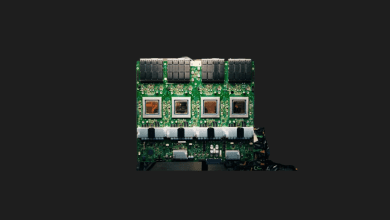
Let’s talk hardware. At MWC, China’s tech giant Huawei unveiled the Atlas 950 AI supercomputer, and it is an absolute monster designed to go toe-to-toe with Nvidia’s Vera Rubin architecture.
The specs are terrifyingly good:
- Powered by approximately 8192 NPUs connected via UnifiedBus.
- 16.3 PB/s total interconnect bandwidth.
- A staggering 1152 TB of memory support.
My perspective: The US government thought that banning Nvidia chip exports to China would slow down their AI progress. Instead, it looks like it just forced Huawei to accelerate their own internal hardware development. The Atlas 950 treats thousands of chips as one single logical computer, offering ultra-low latency. The hardware war is officially multipolar.
Hollywood, AI, and… Ben Affleck?

I’ve always said that AI won’t replace filmmakers; filmmakers who use AI will replace those who don’t. Netflix seems to agree, as they just bought InterPositive, an AI startup founded by none other than Ben Affleck.
Instead of generating fake, prompt-based videos from scratch, InterPositive’s AI analyzes raw, actual footage from a film set and helps generate post-production assets based on that real data. Affleck is joining Netflix as a senior advisor, bringing his whole engineering team with him. This is exactly how AI should integrate into the creative arts—as a tool to enhance human labor, not bypass it.
The Geopolitics of the “AI Bubble”


We often think of AI as just code and math, but it runs on money and electricity. Professor Jiang Xueqin released a chilling warning this week: The escalating conflict with Iran could be the needle that pops the global AI bubble.
Here is the reality check: A massive chunk of the capital keeping the AI industry afloat right now comes from sovereign wealth funds in Saudi Arabia, Qatar, and the UAE. If the Middle East is engulfed in a broader war, those investments will freeze overnight. If the money stops flowing, the compute stops running. It’s a sobering reminder of how fragile this tech boom actually is.
The End of the Anonymous Internet
If there is one story that kept me up at night this week, it’s this one. A new study proved that Large Language Models can absolutely destroy internet anonymity.
By analyzing the way you write—your syntax, vocabulary, and sentence structure across different platforms—AI can now match your anonymous “burner” accounts to your real identity. * Accuracy Rate: 90%
- Recall Rate (Success in finding a match): 68%
Whether it’s an oppressive government hunting down dissidents, or an ad agency trying to build a hyper-targeted profile on you, the ability to hide online is evaporating.
⚡ Rapid-Fire Tool Updates & Quick Hits
I know that was heavy, so let’s run through some quick tool drops and industry shifts you should know about:
- Google’s NotebookLM just got a “Cinematic Video Overviews” feature. You upload your research docs, and it generates a cinematic, narrated video explaining them. I tried it; it’s aggressively good.
- Kiwi Edit launched, letting you seamlessly swap out elements or entirely change the style of existing videos using AI.
- OpenAI Codex Security is now live. It acts as an autonomous agent that finds vulnerabilities in your code and automatically writes patches for them.
- Xiaomi took its humanoid robots out of the lab and actually put them to work on the assembly line of their EV factory. The future is here, and it’s building cars.
- Apple Music is introducing “Transparency Labels” in their metadata so you finally know if the track you are listening to was generated by AI.
- Meta is officially tired of paying Nvidia and AMD, announcing plans to develop their own custom processors to train future AI models.
Final Thoughts from Ugu
Looking back at this week, the sheer velocity of change is intimidating. We are seeing AI get smaller (living in our phones), smarter (showing its thought process), and far more entangled in global warfare and privacy debates. The technology is amazing, but the human decisions behind it are what we really need to watch.
I’m incredibly curious to hear your take on that privacy study. If an AI can figure out exactly who you are just by analyzing your writing style, are you going to change the way you interact on platforms like Reddit or X? Let me know what you think down below!
You Might Also Like;
- The Dark Side of Nanotechnology: Could Microscopic Swarms Erase Billions?
- The Illusion of Digital Immortality: Are You Really Uploading Your Mind?
- The View That Changes Everything: Artemis 2’s Deep Space Eclipse
-

-

-

-
-

-

-

-
-
-

-

-

