
AI technologies, which have become increasingly widespread in daily life recently, continue to develop rapidly. Almost every day brings a remarkable breakthrough in this field, and significant milestones are being crossed one by one. In our “AI Diaries” series, we continue to regularly record the evolution of this technological revolution, which has the potential to significantly alter life on Earth in the coming period.
What Happened in the AI World This Week?
As always, new AI tools have entered our lives this week, alongside major updates to popular models like GPT and Gemini. Here are the highlights of the week in the AI world:
Gemini Gets Smarter with 3.1 Pro and Gains Music Generation via Lyria 3


Google introduced the new Gemini 3.1 Pro, a model featuring complex problem-solving and advanced reasoning capabilities. The model achieved a verified score of 77.1% on the ARC-AGI-2 benchmark, a rigorous test in the AI world. This result is more than double the reasoning performance of its predecessor, Gemini 3 Pro. According to Google, 3.1 Pro doesn’t just generate correct answers; it can visualize complex topics, make large datasets instantly understandable, and provide holistic solutions for creative projects.
Another major update for Gemini this week is the addition of a music generation feature to the Gemini app. Powered by the Lyria 3 model developed by Google DeepMind, users can now create 30-second tracks in their desired style using text prompts. Additionally, users can upload a photo or video and ask the AI to compose a song that matches the mood of the content.
Taalas Unveils Its First Chip, Revolutionizing AI Hardware


Taalas, a US-based startup, announced the HC1 chip, which could revolutionize AI hardware. The main difference between this chip and platforms like Nvidia Blackwell is that it “embeds” an AI model directly into the silicon rather than running it as software. The model’s parameters are physically etched into the chip, achieving sub-millisecond latency and extremely low-cost inference performance.
According to the company, HC1 offers inference speeds two orders of magnitude faster than GPU-based systems and about 10 times higher than the Cerebras Systems platform. The first version was optimized for Meta’s Llama 3.1 8B model. Taalas aims to enter the market with both hardware sales and a cloud service model.
Meta Patents “Digital Clone” for Deceased Users’ Accounts


Meta has secured a patent for an AI model that can continue posting on social media accounts after a user passes away. Approved last December, the patent goes beyond text and image sharing; it covers a system capable of simulating the deceased person’s voice and video calls.
The LLM-based system will analyze a user’s social media history to create a digital copy capable of interacting with other users, replying to direct messages, leaving likes, and writing comments.
Apple Developing 3 New AI-Powered Wearables

According to a new report by Mark Gurman, Apple is preparing to significantly expand its wearable portfolio. The company is working on three new AI-focused products that will integrate with the iPhone: smart glasses, a necklace-type AI accessory, and next-generation AirPods equipped with cameras. These devices will analyze the user’s surroundings via built-in cameras, allowing Siri to take appropriate contextual actions.
OpenAI’s First Hardware Device Revealed: A Camera-Equipped Smart Speaker


OpenAI’s collaboration with iconic Apple designer Jony Ive for AI-supported hardware has reportedly settled on its first product: a smart speaker with an integrated camera. Planned for release in early 2027 (February at the earliest), the device features a facial recognition system similar to Apple’s Face ID, allowing it to offer contextual suggestions by detecting users and their surroundings. OpenAI is also reportedly working on smart lamps and AI glasses for 2028 and beyond.
Samsung Introduces the New and Advanced Bixby

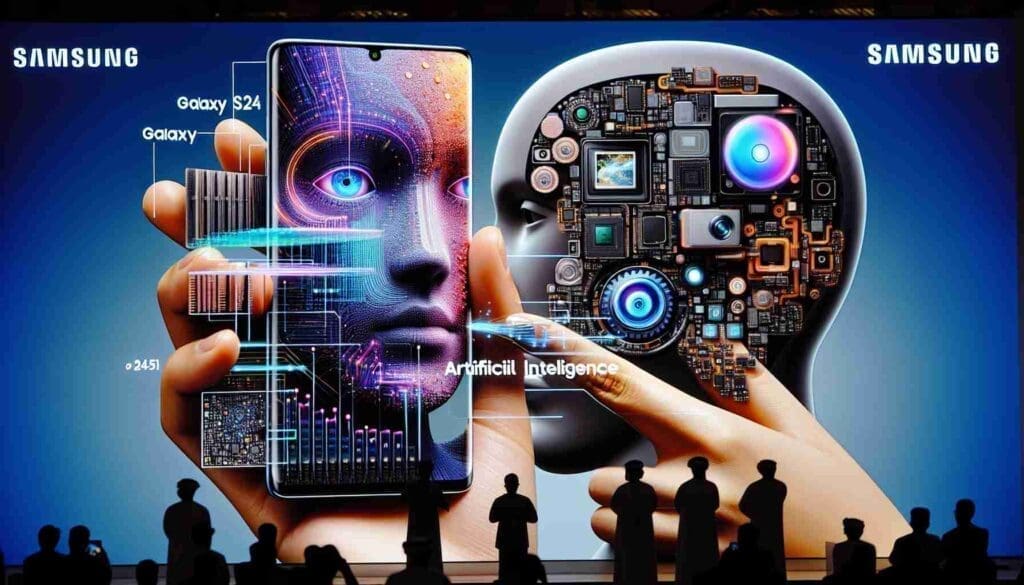
Samsung announced a new version of Bixby as part of the One UI 8.5 update. Positioned as a more advanced “device agent,” the updated Bixby features a redesigned interaction model that understands natural conversational patterns. Users no longer need to know technical terms or settings menu names; Bixby analyzes the intent from everyday phrases and seamlessly activates the appropriate settings.
New AI Tools Introduced This Week

- Alibaba Qwen 3.5: Alibaba’s most advanced LLM yet features a 1M token context window. While trained on 397 billion parameters, it efficiently uses only the necessary 17 billion active parameters per task. It processes both text and visual/video inputs.
- Anthropic Claude Sonnet 4.6: Now the default for Free and Pro users, featuring a 1M token context window and improved coding and computer use skills.
- AnchorWeave: An open-source alternative to Google’s Genie 3, capable of creating 3D interactive worlds.
- AudioX: A new model that analyzes written and visual inputs to generate corresponding audio and music files.
AI World Briefs
- Nvidia is preparing to invest $30 billion in OpenAI, potentially pushing OpenAI’s valuation to $730 billion.
- Samsung announced comprehensive Perplexity integration for the Galaxy S26 series, activated via the “Hey Plex” wake phrase.
- The Pentagon is threatening to penalize Anthropic over restrictions on the military use of its AI, considering declaring the company a “supply chain risk.”
- Nvidia CEO Jensen Huang teased that a new chip to be introduced on March 16 at the GTC 2026 event will “surprise the world.”
- BIOPREVENT, an AI tool for organ transplants, can predict complications after stem cell and bone marrow transplants months in advance.
- It was revealed that a school shooter in Canada who killed 8 people had his ChatGPT conversations flagged by OpenAI employees months prior, but the company chose not to inform the police.
- OpenAI CEO Sam Altman denied claims that ChatGPT has high water consumption (allegedly 64 liters per query).
- A new report by climate-focused NGOs revealed that tech giants’ claims about AI’s climate benefits lack verifiable evidence.
- A multi-year agreement between Nvidia and Meta will see millions of Blackwell and Rubin chips supplied, alongside Grace and Vera CPUs deployed in data centers.
- Claude Code Security was introduced, scanning software code like a human cybersecurity expert and recommending appropriate patch packages.
- Google NotebookLM gained slide editing and PPTX export support, initially available to Pro and Ultra users.
You Might Also Like;
- A Century-Old Aviation Dream Reborn: The Channel Wing VTOL Takes Flight
- The Dawn of the Automated Battlefield: How Ground Robots Are Redefining Warfare
- The Insatiable Hunger of AI: Why Tech Giants Are Chasing Natural Gas
-

-

-

-

-

-

-
-
-

-

-

-
