
AI, short for artificial intelligence, is already an integral part of our lives, from the assistants on our smartphones to the platforms recommending TV shows. But these are just the beginning of the AI world. Remember those super-intelligent robots and systems we see in sci-fi movies—the ones that can think, learn, and act almost like humans? That technological equivalent is called Artificial General Intelligence (AGI).
What is Artificial General Intelligence (AGI)?


In its simplest definition, AGI is a theoretical type of artificial intelligence that can understand and learn any intellectual task a human can perform. Today’s AI systems are specialists in specific, “narrow” fields. For example, one might only play chess, while another only recognizes faces.
AGI, however, won’t be a specialist in a single task. Instead, it will possess a general ability to understand and reason. We’re talking about a system that could learn to play chess and, at the same time, chat with you about how your day went.
What’s the Difference Between Today’s AI and AGI?


To better grasp this concept, it’s crucial to understand the fundamental differences between current AI and AGI.
Narrow AI
We can categorize all currently used AI systems under this umbrella. Even though each is specialized in its field, they fundamentally serve a specific purpose, which is why we call them “narrow AI.”
- They are designed for a specific task and cannot go beyond it. For instance, a translation app can do an excellent job of translating but can’t give you a recipe.
- They require massive amounts of labeled data to learn.
- They only recognize patterns they have been taught and lack general common sense or the ability to reason based on situations.
Artificial General Intelligence (AGI)
- Just like a human, it can learn and apply many tasks across different fields. It can use knowledge learned in one area to solve a problem in a completely different one.
- It learns not just from data, but also from its experiences and interactions with its environment.
- It can understand complex problems, think abstractly, plan, and make decisions using common sense.
What Will Happen When AGI Enters Our Lives?
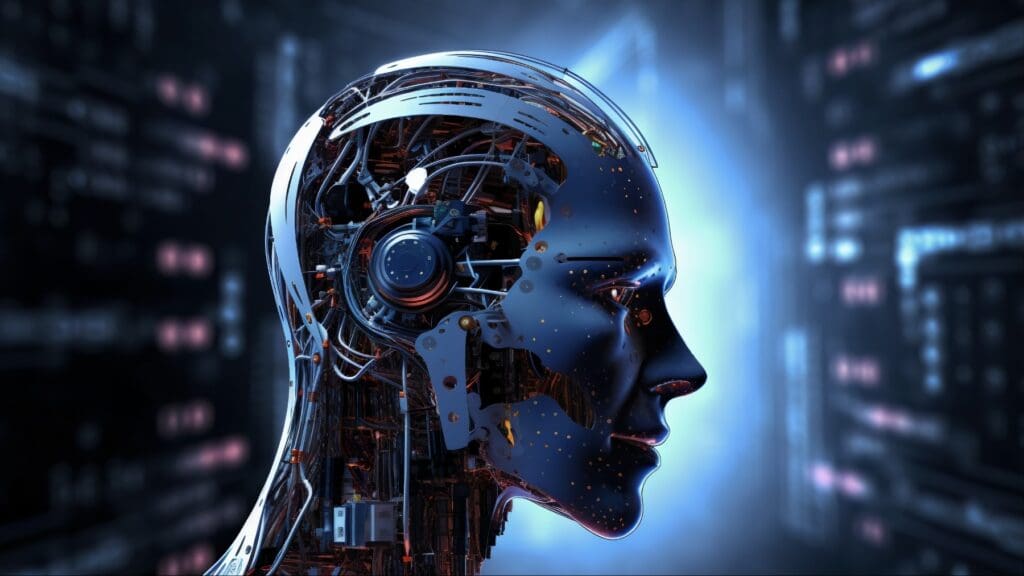
AGI’s potential is still being explored. While countless theories exist about what could happen, experts point to several highly probable outcomes:
- Healthcare and Science: Definitive solutions for diseases like cancer could be found, and complex global issues such as climate change could be analyzed, leading to solutions. AGI could read all scientific articles accumulated by humanity over thousands of years in seconds, establishing connections no one else noticed, leading to new discoveries.
- Work and Economy: Many industries, from manufacturing to management, could become fully automated. While this might eliminate some professions, it could also create new job fields that we can’t even imagine today.
- Daily Life: Systems that assist us in every aspect, from housework to personal assistance, understanding our needs and anticipating them, could become a part of our daily lives.
Why Isn’t AGI Here Yet?


While AGI sounds fantastic, developing it is incredibly difficult. Scientists and engineers point to several major obstacles on this path:
- Common Sense and Consciousness: Teaching a machine “common sense” is very challenging because common sense is a culmination of countless experiences we gain over years. Furthermore, since the nature and function of consciousness are not yet fully understood, replicating it in a machine currently seems impossible.
- Efficient Learning: While humans can learn something new from just a few examples, AI systems require thousands, even millions, of data points. AGI needs to be able to learn efficiently like humans.
- Physical Interaction: Understanding the real world isn’t just about data analysis. Interacting with the physical world, touching, and moving are also parts of intelligence. This suggests that achieving the necessary progress in AGI will be difficult without revolutionary advancements in robotics.
Will AGI Take Our Jobs?
AGI will certainly change the world of work. Just like during the Industrial Revolution, some professions might disappear due to automation. However, simultaneously, the innovations and efficiencies brought by AGI will also create new job fields and roles that we cannot even imagine today.
Can AGI Take Over the World?
This is one of the most debated topics in the field of AGI ethics and safety. While it theoretically carries risks, researchers worldwide are already working on security protocols and ethical guidelines to ensure that AGI works for the benefit of humanity and remains under control.
When Can We Use AGI?
It’s impossible to give a definite date for this. Some experts suggest it might be possible within the next 20-30 years, while many believe it’s a much longer-term goal. All we know is that this leap represents one of the biggest scientific objectives in human history.
The development of AGI brings with it significant challenges, both technological and ethical. Do you think humanity can ensure that the benefits brought by AGI outweigh its risks?
You Might Also Like;
-

-

-

-
-
-

-

-
-

-
-

-