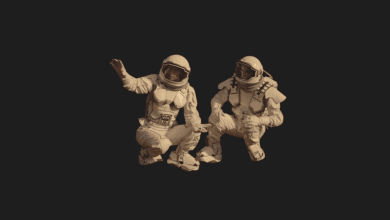
The Dream Chaser spaceplane, publicly unveiled in 2004 and with roots tracing back to a 1990s NASA project, is finally preparing for its debut in space. However, the first flight is not expected to dock with the International Space Station (ISS); instead, the vehicle will conduct an independent orbital test.
The Dream Chaser spaceplane, under development for over two decades, has yet to reach orbit. This mini-shuttle project, first announced in 2004, has gone through many phases, but its anticipated launch has been repeatedly postponed. Now, it’s been revealed that its initial flight will proceed a bit differently.
According to a recent announcement by NASA, the Dream Chaser’s inaugural space journey will not include docking with the International Space Station (ISS). Instead, an independent test flight will be conducted in space. This means the vehicle will fly freely in orbit but will not approach the station. This decision aims to introduce flexibility into the vehicle’s development process and initiate a transition to accommodate broader mission profiles.
Over Two Decades of Development


The Dream Chaser’s origin dates back to the HL-20 space vehicle concept developed by NASA in the 1990s but never flown. This design was resurrected in 2004 by a private company called SpaceDev. Shortly after, SpaceDev was acquired by Sierra Nevada Corporation (SNC), which gave the project new momentum.
In the 2010s, SNC sought to join NASA’s “Commercial Crew” program. However, it lagged behind major competitors like SpaceX and Boeing. Nevertheless, the Dream Chaser was not completely eliminated. In 2016, NASA decided to support the vehicle’s cargo version. The Dream Chaser was thus repositioned as a cargo vehicle to transport supplies to the ISS.
Sierra Space (SNC’s space-focused subsidiary) was granted at least seven resupply flights to the ISS. These missions were distributed among three companies, along with SpaceX’s Dragon and Northrop Grumman’s Cygnus vehicles. The total contract value was reported to be around $14 billion. However, NASA recently announced that it is no longer committing to a specific number of flights.
Why a Free Flight Instead of Docking?


While the exact reasons for the Dream Chaser not approaching the ISS have not been explicitly stated, technical reasons are suggested. It is speculated that NASA has not yet fully certified the vehicle’s propulsion system. The vehicle is equipped with over 20 small engines capable of operating at different power levels. To safely approach the station, these systems must meet both technical and security standards.
From this perspective, the flight has been transformed into a demonstration mission: the vehicle’s core systems will be independently tested to see how they function in the space environment.
Future Outlook
Sierra Space has announced plans for the Dream Chaser’s first mission in late 2026. However, considering the frequent delays in space projects, this date is highly likely to slip into 2027. This reduces the likelihood of the Dream Chaser performing numerous missions for the ISS, which is scheduled to be decommissioned in 2030. Currently, the vehicles from SpaceX and Northrop seem sufficient to meet the station’s cargo needs.
Despite this, the Dream Chaser is not expected to become completely obsolete. Sierra Space plans to position it as a potential transport vehicle for future commercial space stations. The company also emphasizes that flexibility in space transport is becoming critical for various sectors, including the defense industry.
The company’s Chairman, Fatih Özmen, states that this new approach supports not only collaborations with NASA but also new opportunities in areas like defense technologies. The Dream Chaser’s potential for “mission flexibility” and “versatile use” is particularly notable for its possible integration with different future space platforms.
Are you interested in learning more about the technical details of the Dream Chaser’s propulsion system?
You Might Also Like;
- A Century-Old Aviation Dream Reborn: The Channel Wing VTOL Takes Flight
- The Dawn of the Automated Battlefield: How Ground Robots Are Redefining Warfare
- The Insatiable Hunger of AI: Why Tech Giants Are Chasing Natural Gas
-
-

-

-
-
-

-
-
-

-

-

-